The First Workshop on

Synthetic & Adversarial ForEnsics
(SAFE)

Innovate. Connect. Transform.

Join us at WACV 2026

March 6, 2026 (Full day)

at JW Marriott Starpass in Tucson, Arizona

Submit Paper

Call for papers

Topics: Synthetic media detection, adversarial attacks, multimedia forensics, robustness, AI security, generative models

We invite original research contributions in (but not limited to) the following areas:

  • Generative image and video models (e.g., diffusion models, VLMs, GANs) and foundation models for synthetic media creation, manipulation, and robustness evaluation
  • Defensive fingerprinting and watermarking of generative models for source attribution
  • Red teaming techniques for generative models, including adversarial simulation environments
  • Provenance tracking and authenticity verification of digital media
  • Detection of synthetic media (e.g., AI-generated images, and video)
  • Adversarial attack, detection, and mitigation methods for visual data including video streams
  • Training data poisoning detection and mitigation for generative models
  • Joint modeling of synthetic media and adversarial threats
  • Benchmarks, datasets, and evaluation metrics for adversarial detection and robustness
  • Model explanation and interpretation
  • Ethical, societal, and legal implications of synthetic and adversarial media

We will accept regular papers (6 to 8 pages, excluding references & appendices) as oral presentations and will be included in the WACV 2026 Workshop Proceedings using the appropriate WACV 2026 formatting guidelines. Short papers and extended abstracts (2 to 4 pages, excluding references & appendices) will be accepted as oral presentations but will not be archival.

All submissions will undergo a double-blind peer review to ensure fairness and impartiality in the evaluation process.

Featured Speakers

Photo of Prof. Matthew Stamm
Prof. Matthew Stamm
Drexel University
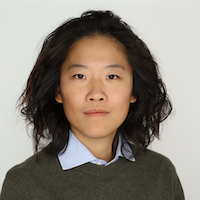
Photo of Prof. Yuan Hong
Prof. Yuan Hong
University of Connecticut
Photo of Maty Bohacek
Maty Bohacek
Stanford and Google DeepMind
Photo of Nicole Meng
Nicole Meng
Tufts University

Workshop Schedule

9:00 9:10
Welcome Remarks
9:10 10:10
Keynote
Nicole Meng
Session 1: Adversarial Attacks
10:10 10:25
Paper
Towards Consistent and Efficient Decision-Based Attacks
10:25 10:40
Paper
Seeing Isn't Believing: Context-Aware Adversarial Patch Synthesis via Conditional GAN
10:40 11:40
Keynote
Yuan Hong
11:40 1:00
Lunch Break
1:00 2:00
Keynote
Matthew Stamm
Session 2: Deepfakes Across Modalities & Data Generation
2:00 2:15
Paper
Audio Deepfake Detectors vs. Real Fraud – The Fall of Benchmarks
2:15 2:30
Paper
Read and Tell – Speech Dataset for Scripted and Spontaneous Scenarios
2:30 2:45
Paper
From Prompts to Deployment: Auto-Curated Domain-Specific Dataset Generation via Diffusion Models
2:45 3:00
Coffee Break
Session 3: Deepfake Detection & Forensics
3:00 3:15
Paper
Real Eyes on Fake Videos: Human Perception & Reasoning of Deepfakes
3:15 3:30
Paper
Adversarial Fingerprints: Learning Intrinsic Signatures of Generative Models Beyond Watermarks
3:30 3:45
Paper
Forensic Detection of Generated MRI Imagery Using Autoregressive Modeling and Frequency Analysis
3:45 4:00
Paper
Detecting Deepfake Talking Heads from Facial Biometric Anomalies
4:00 5:00
Keynote
Maty Bohacek
5:00 5:05
Closing Remarks

Organizers

Dr. Josué Martínez Martínez
MIT Lincoln Laboratory
Dr. Pooya Khorrami
MIT Lincoln Laboratory
Ms. Danielle Sullivan
MIT Lincoln Laboratory
Dr. Sheila Alemany Blanco
MIT Lincoln Laboratory
Dr. Giselle Zeno
MIT Lincoln Laboratory
Prof. David Harwath
The University of Texas at Austin
Dr. Jonas Borgstrom
MIT Lincoln Laboratory
Dr. Pedro Torres Carrasquillo
MIT Lincoln Laboratory

Program Committee

  • Palvi Aggarwal, University of Texas at El Paso
  • Jun Bai, University of Cincinnati
  • Olivia Brown, MIT Lincoln Laboratory
  • Rajmonda Caceres, MIT Lincoln Laboratory
  • Miriam Cha, MIT Lincoln Laboratory
  • Cagri Dagli, MIT Lincoln Laboratory
  • Jieren Deng, Microsoft Azure Core
  • Yunbin Deng, MIT Lincoln Laboratory
  • Steven Gomez, MIT Lincoln Laboratory
  • John Holodnak, MIT Lincoln Laboratory
  • Marjan Hosseini, University of Connecticut
  • Mostafa Karami, University of Connecticut
  • Anantaa Kotal, University of Texas at El Paso
  • Kaleel Mahmood, University of Rhode Island
  • Nishka Pant, New York University
  • Dhir Patel, MIT Lincoln Laboratory
  • Keegan Quigley, Ultravox.ai
  • Eric Quintero, MIT Lincoln Laboratory
  • Tim Reid, MIT Lincoln Laboratory
  • Luis Romero, Johns Hopkins University
  • Nayda Santiago, Universidad de Puerto Rico
  • Georgia Smits, University of Washington
  • William Stephenson, MIT Lincoln Laboratory
  • Adaku Uchendu, MIT Lincoln Laboratory
  • Aayushi Velma, University of Connecticut
  • Evan Young, MIT Lincoln Laboratory

Important dates

  • Submissions Open:
  • Submissions Deadline: (conversion tool)
  • Notification Acceptance:
  • Camera-ready submissions: (conversion tool)
  • Submissions Portal: OpenReview